
When remodeling your kitchen or bathroom, choosing the right countertop matters. Two materials that keep coming up are Dekton and quartz. Both look stunning. Both are durable. But they perform very differently and sit at different price points.
This guide breaks down the Dekton vs Quartz debate in plain, simple terms so you can make the right call for your home.
What Is Dekton?
- What is Dekton? Cosentino, a Spanish brand, developed Dekton as an ultra-compact surface material. They combine raw materials used in glass, porcelain, and quartz — then compress everything under extreme heat and pressure.
- What is Dekton made of? It contains sintered particles of glass, quartz, and porcelain fused together at very high temperatures. This process eliminates pores and creates an incredibly dense slab.
The result is a hard, sleek surface that resists heat, UV rays, and scratches. It has become very popular in high-end kitchens and outdoor settings.
What Is Quartz?
Quartz countertops are artificial stone surfaces. Each slab is made by manufacturers using approximately 90-95 percent of ground natural quartz mixed with resins, pigments, and binders.
Quartz is available in an enormous range of colors and patterns, since it is engineered. It is impermeable, very strong and among the most favored countertop materials in the world.
Durability:
How Do Both Materials Hold Up?
Dekton has a Mohs hardness score of approximately 8. Quartz is approximately at 7. Dekton is more resistant to scratches and can be used on a daily basis.
Dekton is however more likely to chip along edges in case something heavy falls on it. Quartz is more resistant to impact due to the resin that is contained in it.
Both materials are very good in everyday kitchen use. However, quartz might be a safer choice in case your countertop edges are heavily trafficked.
Heat Resistance: A Clear Winner
Here is where Dekton vs Quartz demonstrates a clear contrast Dekton wins.
A Dekton countertop can withstand temperatures up to 300 o C (572 F). You may put a hot pan on it without any concern. This is why it is perfect for serious home cooks.
Quartz is not heat resistant. The resin binders may discolour or crack when subjected to high heat. Quartz countertops should be used with a trivet or hot pad.
Scratch and Stain Resistance
The two materials are resistant to daily scratches. It would take a lot of effort to scratch either surface to the point of being visible when using the kitchen as intended.
Dekton has a slight advantage in terms of its hardness rating. Nevertheless, scratches which do occur are more difficult to repair than quartz, in which surface problems may occasionally be buffed out more readily.
Both surfaces are totally non-porous, materials do not absorb liquids. Both clean up with coffee, wine, and oils. Neither needs sealing – as natural stone like granite or marble.
Outdoor Use and UV Resistance
Need to plan an outdoor kitchen or a countertop close to a sunny window? This matters a lot.
Quartz decays and turns colorless with time as the resin content of the material is destroyed by UV rays. Quartz is not suggested by manufacturers in outdoor installations.
Dekton is completely UV stable. It does not fade, yellow, or change color when exposed to the sun. Dekton is the obvious choice in any outdoor countertop project.
Everyday Maintenance
The two materials need minimal maintenance. It does not require any sealing or special cleaners. Both surfaces are cleaned using a damp cloth and mild soap.
A single point of note regarding Dekton is that cracking may occur occasionally due to sudden thermal shock. One such example is pouring ice-cold water on a surface that is heated by the sun.
Quartz is less sensitive to temperature variations, and it is easier to keep without much daily care.
Design and Appearance Options
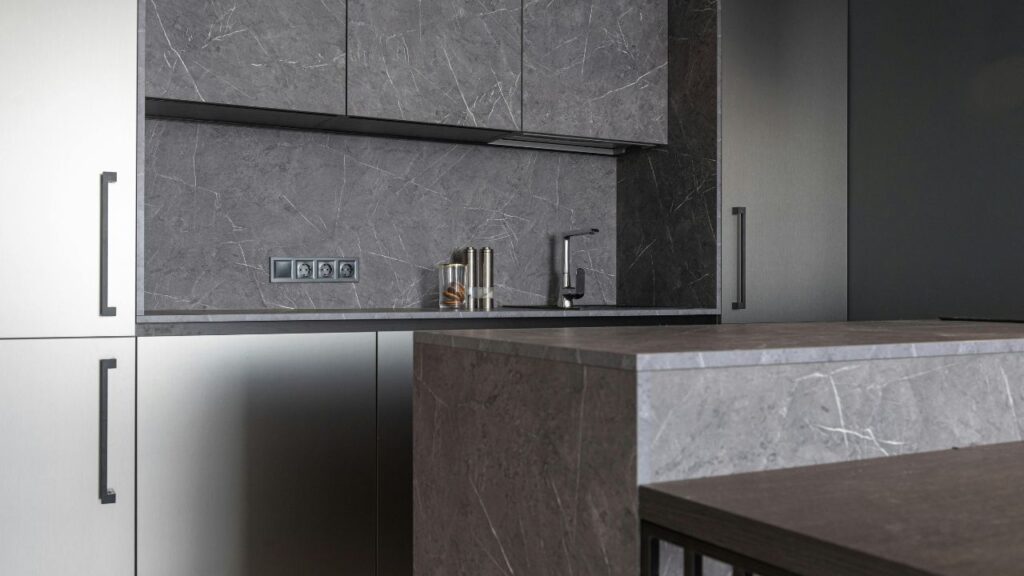
Quartz provides greater flexibility in design. It is made in hundreds of colors, veining patterns and finishes by manufacturers. You want a sleek white, a rich charcoal or a natural marble appearance – quartz has it.
Dekton also has a variety of designs. Its huge slabs with a small grout line provide a very clean and modern appearance that is very effective in the modern environment.
Quartz is better in case design variety is what matters. Dekton is worth considering in case you want a bold architectural look.
Price Comparison
The average price of Dekton countertops is about 80-150 and above per square foot installed. The cost is increased by its complicated production process and specialized installation needs.
Quartz usually ranges between 50 and 120 dollars per square foot installed. It is more accessible, and more counterfeiters operate with it – which contributes to the price competition.
Quartz is cheaper to most homeowners who are concerned about their budget.
Top Brands: Dekton vs Quartz
Here is a look at five leading brands across both materials and what they offer:
| Brand | Material | Key Features | Price Range (per sq ft) | Best For |
| Cosentino Dekton | Dekton | UV stable, heat proof, 20+ year warranty | $80–$150+ | Outdoor & luxury kitchens |
| Silestone | Quartz | HybriQ technology, antibacterial, wide colors | $60–$120 | Everyday kitchens & baths |
| Caesarstone | Quartz | Scratch resistant, 600+ designs, low maintenance | $55–$115 | Modern & contemporary homes |
| Cambria | Quartz | USA-made, lifetime warranty, bold patterns | $70–$130 | Premium residential projects |
| MSI Q Premium | Quartz | Budget-friendly, durable, large slab sizes | $45–$90 | Budget-conscious renovations |
How Do They Compare With Granite?
Many homeowners also ask: is granite more expensive than quartz — and how does granite stack up against Dekton?
Here is a quick three-way comparison:
| Feature | Dekton | Quartz | Granite |
| Heat Resistance | Excellent | Poor | Good |
| Scratch Resistance | Excellent | Very Good | Good |
| UV Resistance | Excellent | Poor | Good |
| Stain Resistance | Excellent | Excellent | Needs sealing |
| Maintenance | Very Low | Very Low | Moderate (needs sealing) |
| Design Variety | Moderate | Very High | Limited (natural patterns) |
| Outdoor Use | Yes | No | Yes |
| Price (installed) | $80–$150+ | $50–$120 | $45–$125 |
| Durability | Very High | High | High |
Therefore, is granite more costly than quartz? Not always. Granite is priced similarly to quartz – however, it needs frequent sealing and additional maintenance. Dekton is the most expensive and the highest performing in the harsh environment.
Granite is also still a favorite among homeowners who prefer the natural and unique appearance of stone. Nevertheless, it is beaten by both quartz and Dekton in terms of practicality and ease of care.
Which One Should You Choose?
Here is a simple breakdown:
Choose Dekton if:
- You possess an outdoor kitchen.
- You cook a lot and require heat resistance.
- You desire big-format slabs that are modern.
- Budget is not such an issue
SELECT Quartz if:
- You desire more color and design choices.
- You require impact resistance.
- You have a smaller budget to work with.
- You desire more convenient access and installation.
Choose Granite if:
- You are fond of the natural, unique appearance of natural stone.
- You are at ease with standard sealing.
- You desire a vintage, old-fashioned look.
Quartz is a viable and affordable option to most homeowners. A Dekton countertop is worth the money when it comes to high-performance, particularly in the outdoors or high-heat conditions.
FAQs
1. Is Dekton countertop better than quartz?
It is based on your requirements. Dekton is more heat and UV resistant. Quartz prevails in terms of impact resistance, variety of design, and cost.
2. What are the negatives of Dekton?
It is costly, more difficult to install, edges can be chipped, and it can crack when subjected to sudden thermal shock.
3. Which is cheaper, Dekton or quartz? Quartz is cheaper. It is usually priced at $50-120/ sq ft installed compared to Dekton at 80-150+/ sq ft.
4. Is Dekton more brittle than quartz?
Yes. Dekton is sturdier yet more fragile and it is more likely to chip at the edges than quartz.